What Does Video Coaching for Business Owners Involve?
Oct 29, 2026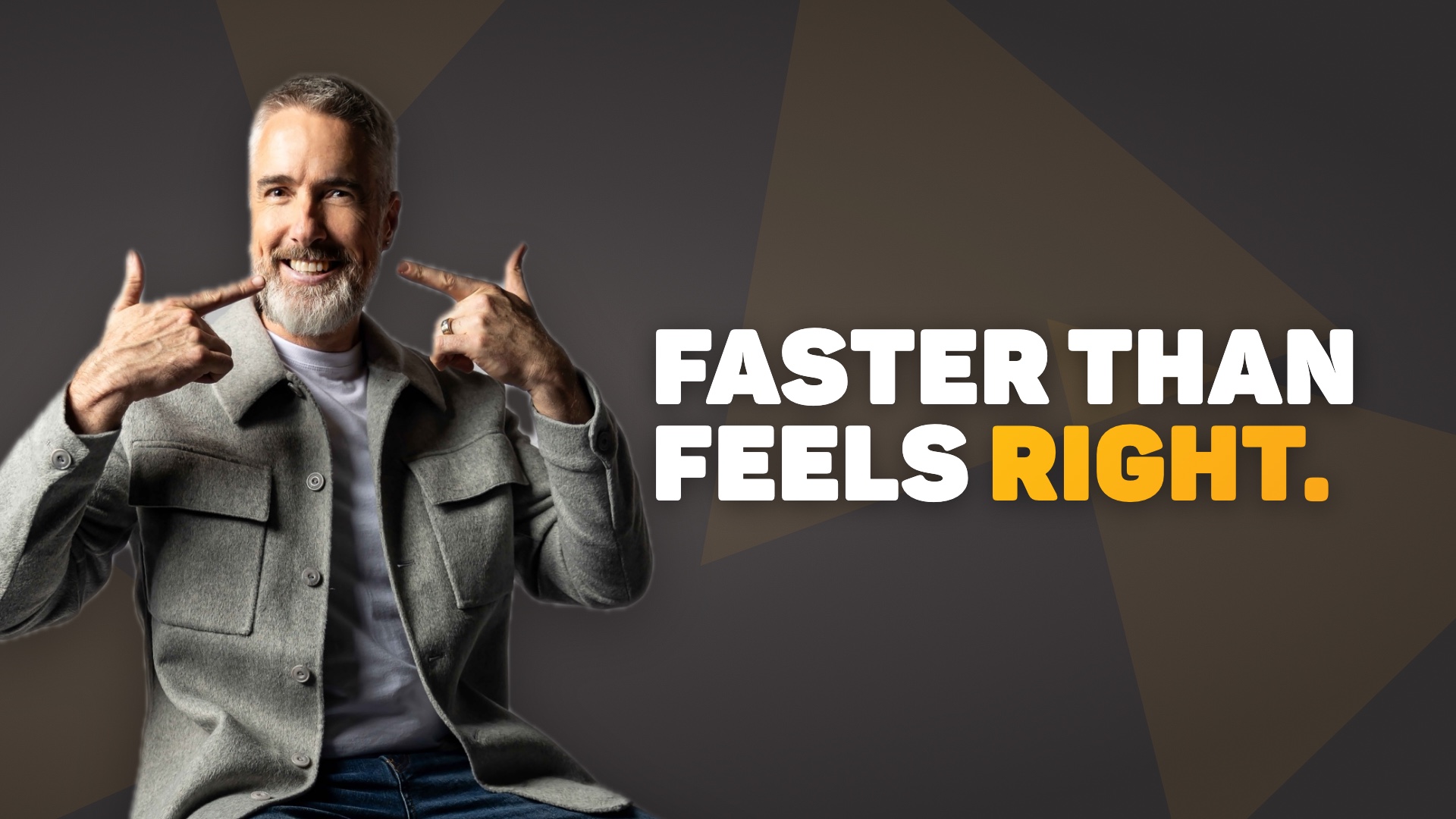
Video coaching for business owners is ongoing, hands-on help to make videos that win work. It covers four things together: what to say (messaging), how you come across on camera (performance), the setup (tech) and where each video goes to work (implementation). In practice that means a weekly live session, feedback on your real videos, and a workbook.
Key takeaways
- Good video coaching works on messaging, performance, tech and implementation at the same time, because a video can fall over at any one of the four.
- Sessions run on your own scripts: a cold read first, then one change at a time, usually the smile, then speed, then tone.
- Most people need to speak faster than feels comfortable, because slow delivery gives viewers time to notice every crack.
- Between sessions you send scripts and videos for feedback, so you are not left guessing whether a take is good enough.
- Clients describe the change as output: Tara Sharma recorded a course she had kept pushing aside in two sessions.
What do you actually get from video coaching?
Four things, worked on together. Most people try to fix video one piece at a time: they buy a camera, or watch tutorials, or try to feel more confident. It rarely sticks, because a video can fall over for any of four reasons.
- Messaging. Who the video is for, what it needs to achieve, the key message and where it will live. If you cannot answer those before you press record, you ramble, repeat yourself and over-explain.
- Performance. How you come across: body language, speed, tone, energy and cadence. Most professionals speak on video the way they type emails, flat and careful.
- Tech. A setup that looks and sounds right without fiddling, so your attention stays on the person watching.
- Implementation. Giving every video a home, whether that is a proposal, a LinkedIn post or a reply to an enquiry, so it does work for you after you record it.
At Ridge Films the coaching runs as the Video Confidence Collective: a one-hour live session each week, a workbook that works through the four pillars over 24 weeks, and feedback on your scripts and videos in between. It is run by Chris Schwager, who has spent more than 30 years in video production. The detail of how the programme runs is in getting confident on camera.
How does a video coaching session run?
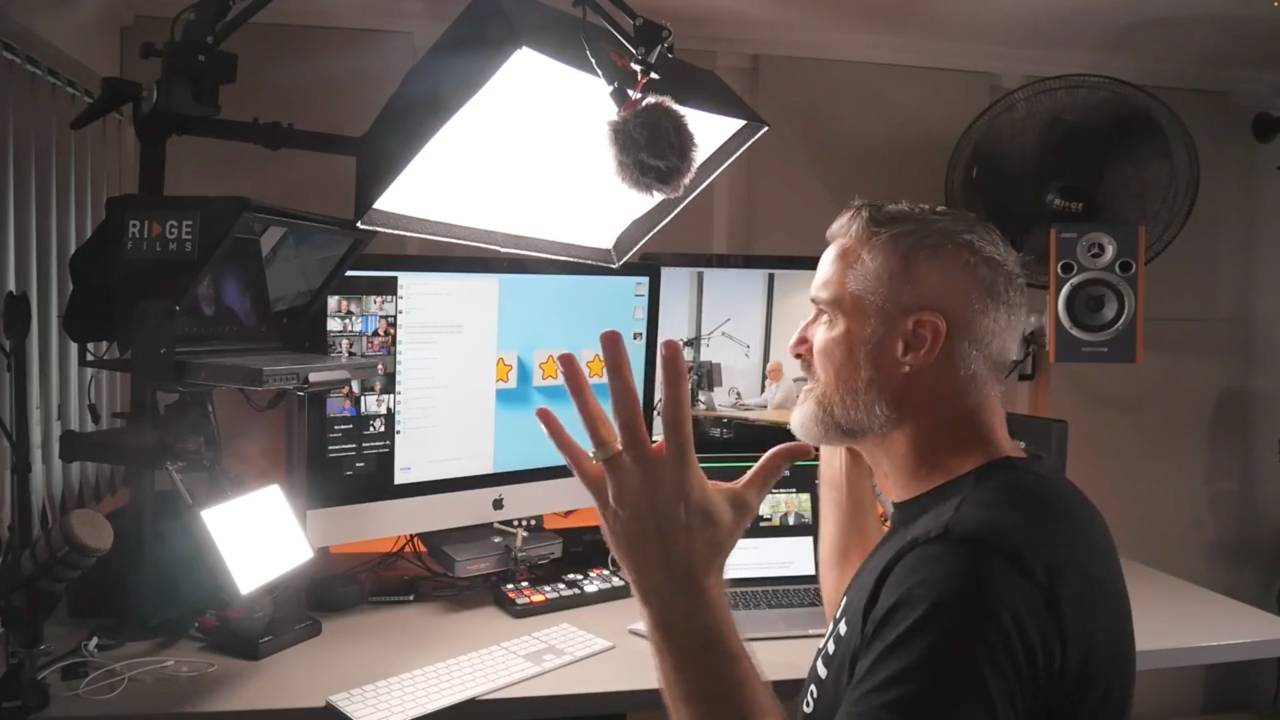
On your own material. You bring a script you actually need to record, and the session builds on it one layer at a time. When Chris coaches someone live, the order is remarkably consistent:
- A cold read with no direction. This is your before.
- The smile, before a word is spoken. A deliberate, forced smile as your default state. Without it you read as concerned or unsure.
- Speed, then more speed. Nearly everyone is too slow, so go faster than feels right. A slow read gives the viewer time to pick at every crack in your delivery.
- Tone. Start high, lift on a comma, come down to a full stop so the listener knows a point has landed. Stuck in the middle of your range sounds robotic.
- Put it together, then take out the pauses that are left.
- Hear it done. Chris reads your script back to you, so you hear the target instead of being told about it.
Feedback follows a simple rule Chris states out loud before the first correction: commend, commend, recommend, commend. Three things working for every one thing to change. The point is to give you a vocabulary for judging your own takes. Calling a take no good gives you nothing to work with. Noticing it needed more tone gives you something to fix on the next take.
What changes in how you come across on camera?
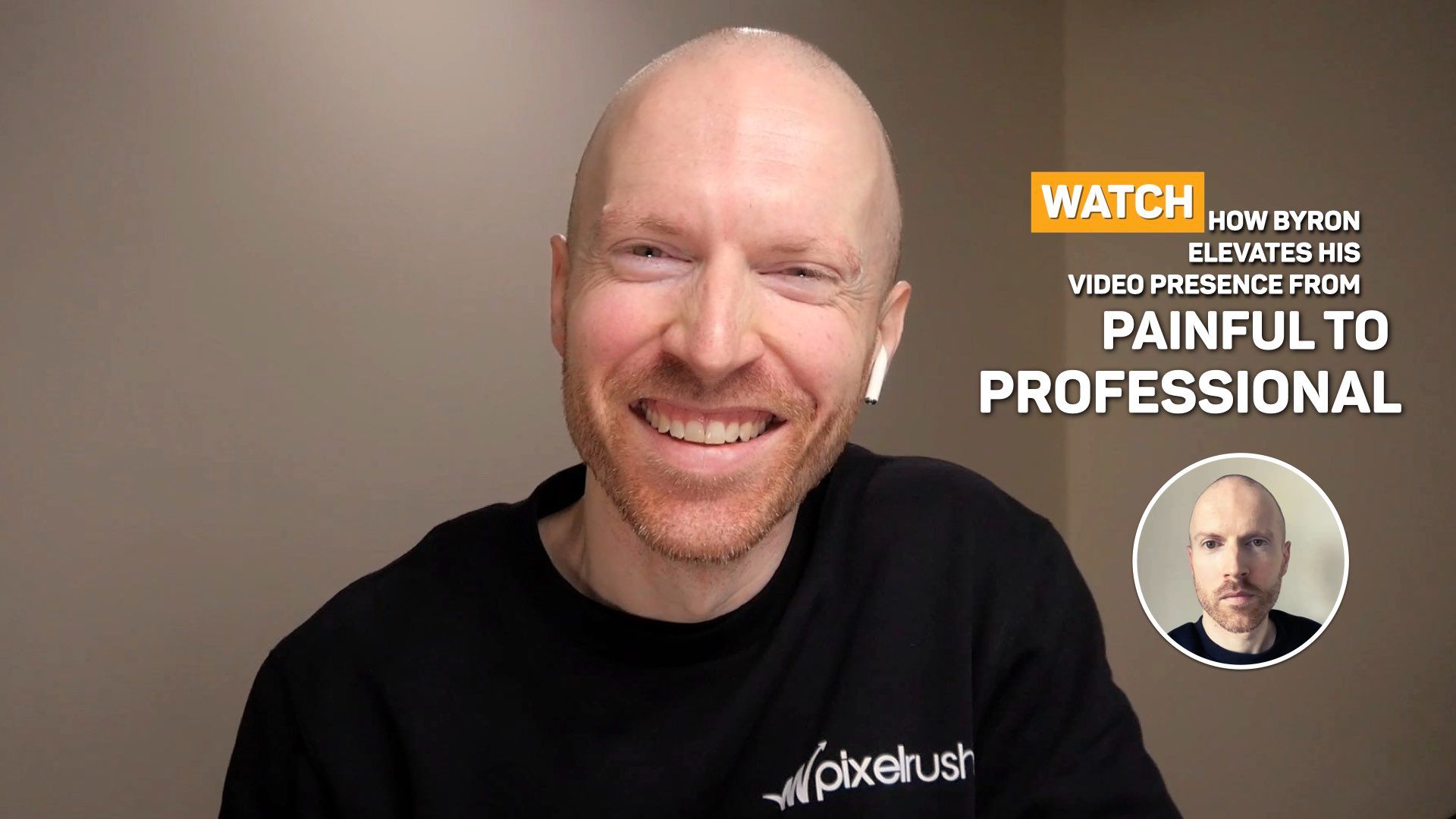
The gap between how you feel and how you look. Byron Trzeciak runs PixelRush, a digital marketing agency, and describes himself as a fairly technical guy who tends to go into too much detail. His before-and-after recordings show the change better than any description:
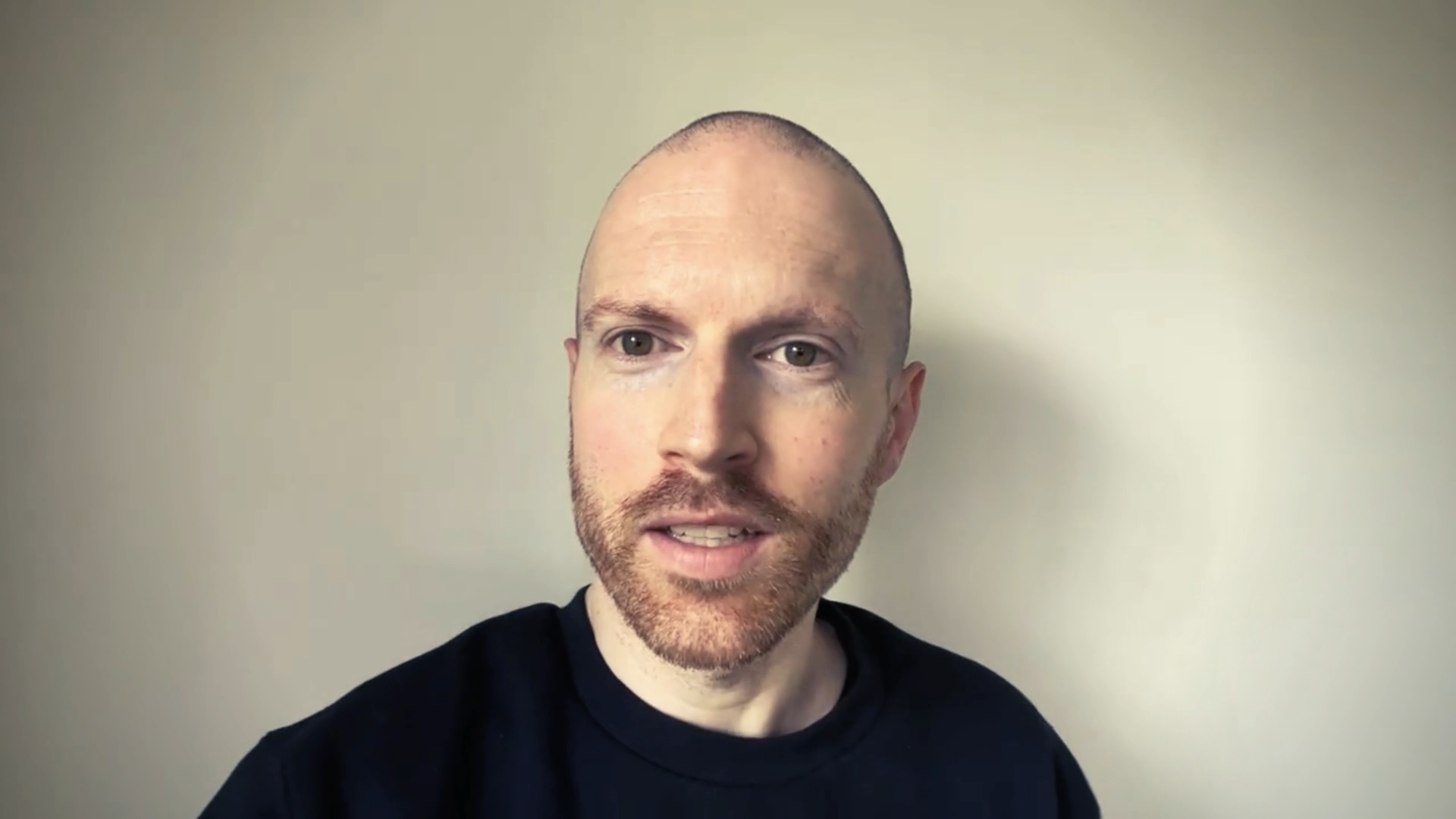
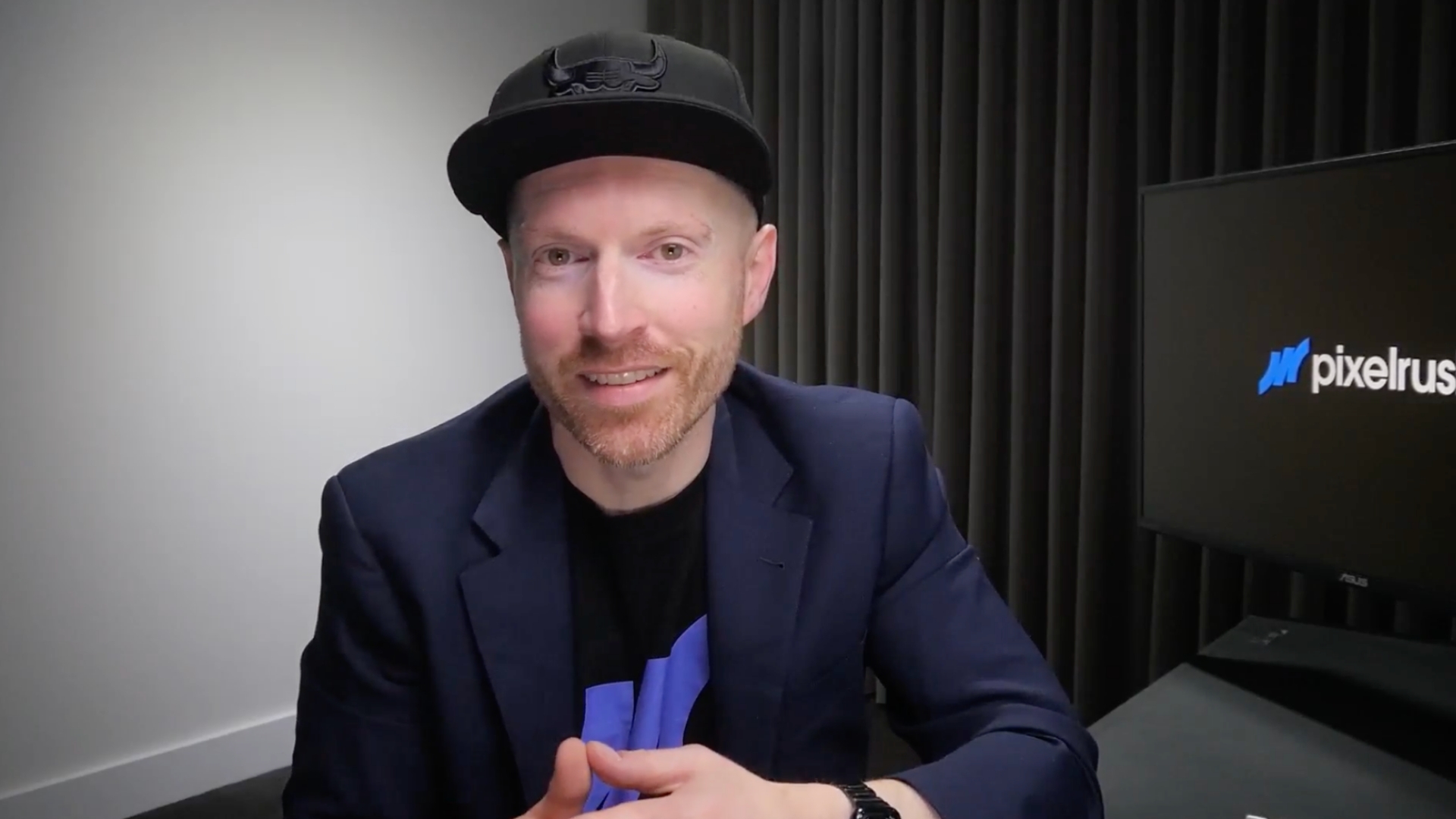
He put it down to a single session of about an hour and a half:
"I'll think about video and video delivery very differently for the rest of my life." Byron Trzeciak
Hear Byron describe it, from 0:59 in his coaching testimonial:
Tara Sharma, who runs the recruitment firm Innov8Search, remembers three things from her coaching: speak much faster than you think you need to, smile instead of looking serious all the time, and use the rise and fall of your voice at certain points in a sentence to keep people listening. Byron's full story is in how Byron added $300K with video.
Why does video coaching cover more than how you present?
Because a polished delivery of an unclear message is still an unclear message, and a clear message nobody sees does nothing. Tara put the delivery side bluntly:
"If you're not delivering it like that, it can look as good as it likes, but it comes across really boring." Tara Sharma
The messaging side matters just as much. Byron says the coaching taught him to compact a script until every line was short, sharp and punchy. Jason Howes of Arrow Executive Sales says it helped him become much more focused on the outcome he was offering his prospects. And without implementation, good videos sit in a folder. Tara had a course for people moving into MedTech that she kept putting off. With the coaching it was recorded within two sessions. Her story is in Tara Sharma's recruiter video case study.
What happens between coaching sessions?
You record, and you send it in. Scripts and finished videos go in on WhatsApp, and feedback usually comes back as a voice message, so you know what to change before you spend another afternoon on the wrong thing. The workbook carries the scripts, templates, audits and AI prompts, and session replays cover the weeks you miss.
The rhythm Ridge recommends is simple: an hour to learn, then an hour to do. If it is not in your calendar, it will not happen.
How long does video coaching take to work?
The first shift can come in one session. Byron noticed his within about 90 minutes, and Tara finished her course in two. Keeping it is the harder part. Chris warns people who train once that the skill fades if they stop, which is why the coaching runs weekly for six months instead of as a one-off course. Repetition is what makes recording feel normal. For why coaching gets there faster than practising alone, see why video coaching speeds your growth.
Video coaching questions we get asked
Do I need a studio before I start video coaching?
No. You can start coaching with the gear you already have, get clear on what to say and how to say it, and decide on equipment later. You can also join the weekly sessions before a studio is installed.
I already present well on stage. Will that carry over to camera?
Partly. Stage skills help, but the camera reads you differently. Reading a script off a teleprompter tends to make people careful and flat, so speed, tone and the smile usually need work even for experienced speakers.
How much time does video coaching take each week?
Plan on the one-hour weekly session plus at least an hour of recording. If a week is tight, even 15 minutes of focused action keeps you moving.
Does a video coach make the videos for me?
No. Coaching gives you the skill and a repeatable process to make them yourself. Editing can be handed off separately if you want it.
Which of these sounds like you?
"I know what I want to say, I just freeze or go flat on camera." That is the performance pillar, and it moves fastest with live feedback.
"I never know what to say, so I don't record." That is messaging, and it is where the coaching starts.
"Honestly, both." Book a call and we will work out where to start.

Where to start
Desktop StudioInstalled for you. One click to record. Video CoachingMessaging, performance, tech and implementation, worked live every week.Two halves of one system. Book a call and we will work out where to start.